Work | Interactive Retail 2.0
The future of interactive retail
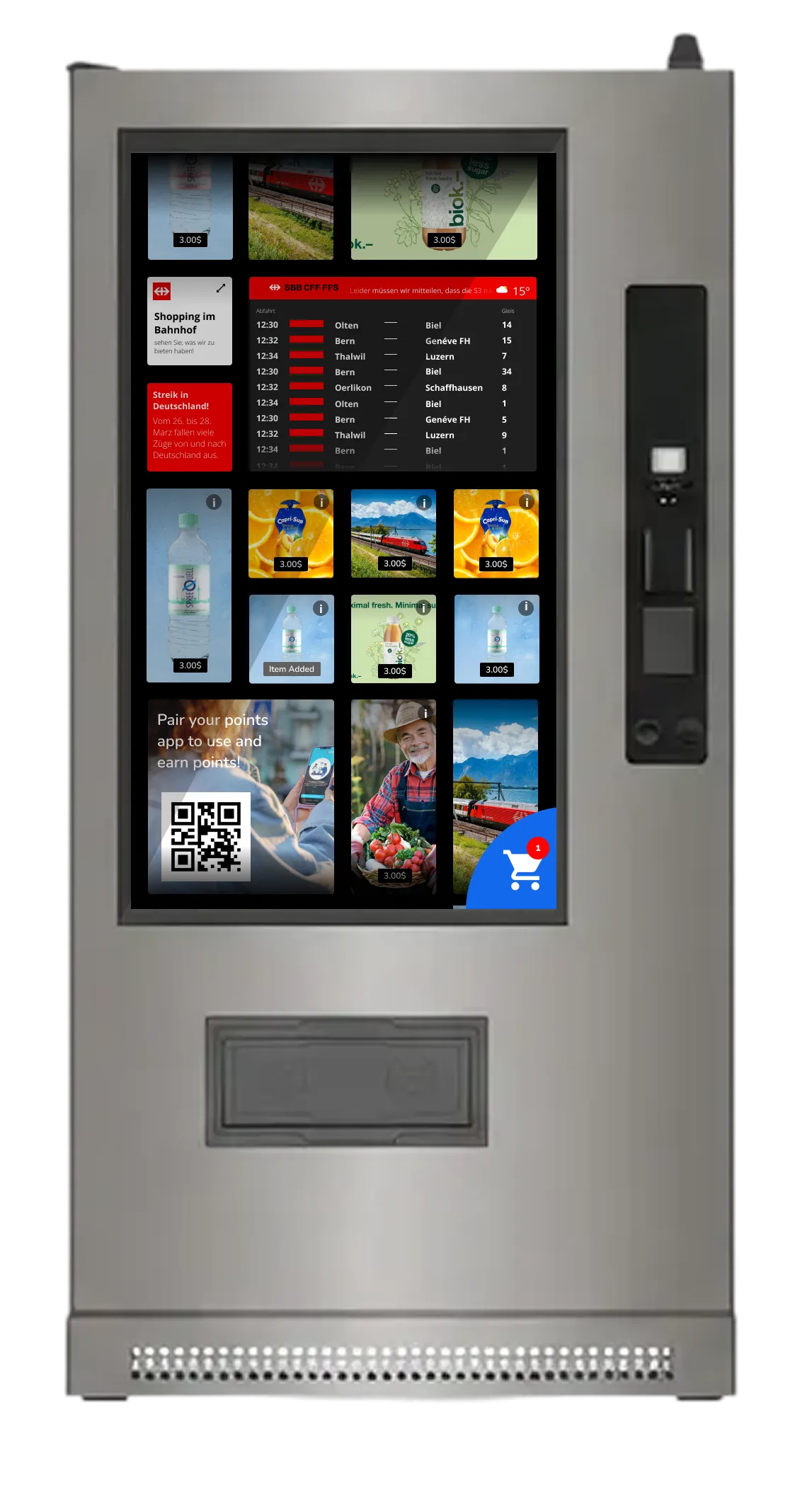
Evolving the vending machine experience at Invenda Group, where item selection and purchase are handled entirely through a screen-based interface. The machines are deployed across train stations, offices, warehouses, and campuses, environments where interactions are brief.
Role
Concept
Product Design
While pricing was already visible, testing confirmed that clarity around products, value, and purchase flow was critical in a screen-first vending model. The existing interface made it difficult for users to quickly understand products and confidently complete a transaction, and the checkout flow followed an interaction pattern that felt unfamiliar, especially for an “on-the-move” context. There was also an opportunity to make the experience feel more considered and relevant to its physical surroundings without slowing users down.
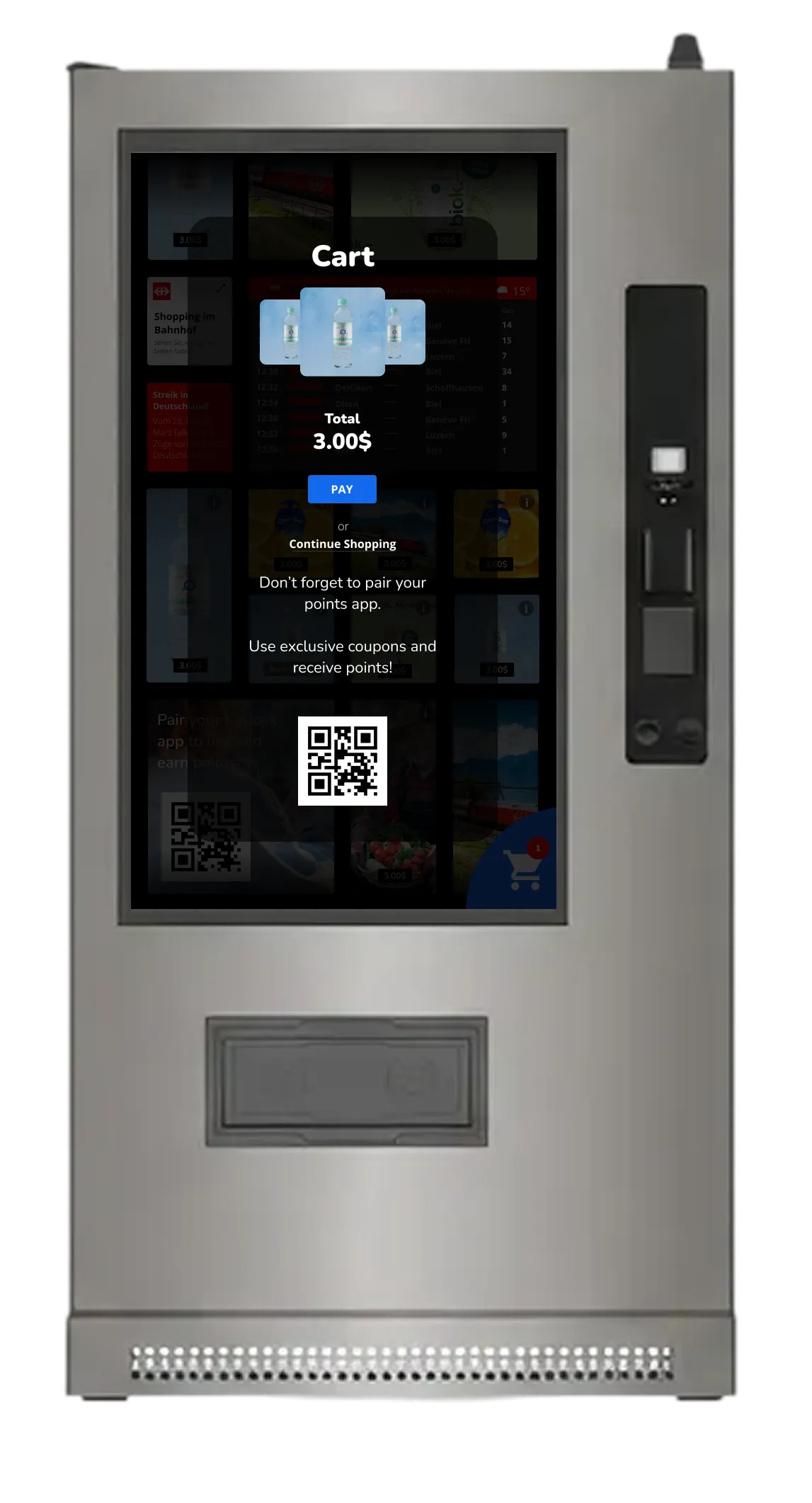
Cart UI
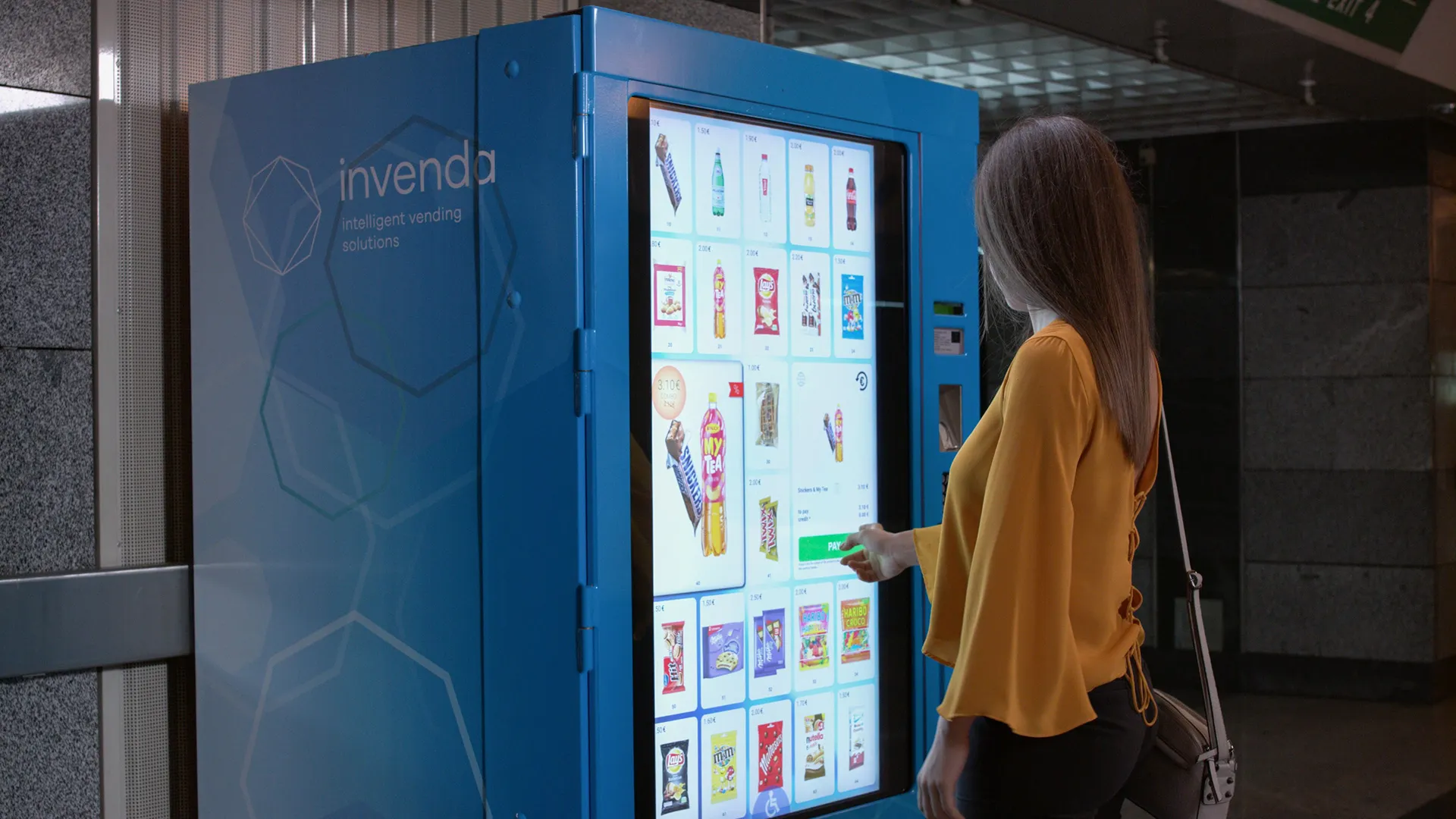
Version 1 Experience
The work focused on improving interface hierarchy and simplifying workflows to reduce hesitation during product selection and checkout. Product information and pricing were treated as priority elements, ensuring users could assess items quickly and move through the flow without friction
Decisions were shaped around users interacting in transient, real-world settings. Observations showed that confidence and speed mattered more than exploration. The redesigned experience prioritises clarity and familiarity while remaining flexible enough to support different deployment contexts. In addition to the core purchase flow, the new experience introduced lightweight contextual content based on the machine’s location. This included situational information, local highlights, or regionally relevant products, designed to enrich the experience without drawing curious users away from a fast transaction. Additionally, the use of ads, another income stream for the business, was also engrained deeper into the experience.
UI Concept
A fully interactive prototype was built to simulate the end-to-end vending experience and tested with users directly in public environments. Comparing the existing interface with the redesigned experience highlighted clearer product understanding and a more intuitive checkout flow. Motion and interactive videos shown during item delivery were developed by a collaborating motion designer, aligned with a broader rebranding effort led as part of this work.